It was July 15, 1982, my sixth birthday. The year before had been busy for our family. My dad had just finished building our new house in Hingham, and my sister had been born on my dad’s own birthday. Life had shifted in more ways than a five-year-old could track. But that summer, my mom wanted to do something that was just for her firstborn.
The night before, she sat down with my dad and told him the plan. She was going to wake me at 4:30 in the morning, before the house stirred, and drive me to the coast to watch the sunrise. My brother and I shared a room, so getting up quietly was a job I took very seriously. I wanted this to be just me and my mom.
She grinned as we came up on Roller Coaster Road, that mischievous glint she still gets. “Hold on, Matty.” The car crested the first hill and dropped fast, my stomach launching into my chest, and I squealed with laughter, gripping the seat as we bounced over the dips.
“Again,” I begged.
“One jump’s enough, buddy,” she said, still smiling. “We’ve got somewhere special to be.”
As we crossed into Hull, the trees thinned out and the smell changed, salt and seaweed instead of pine, the old Volvo’s vinyl seats mixing with the ocean air coming through the cracked window. I pressed my face against the glass and watched the world go from deep green to endless blue.
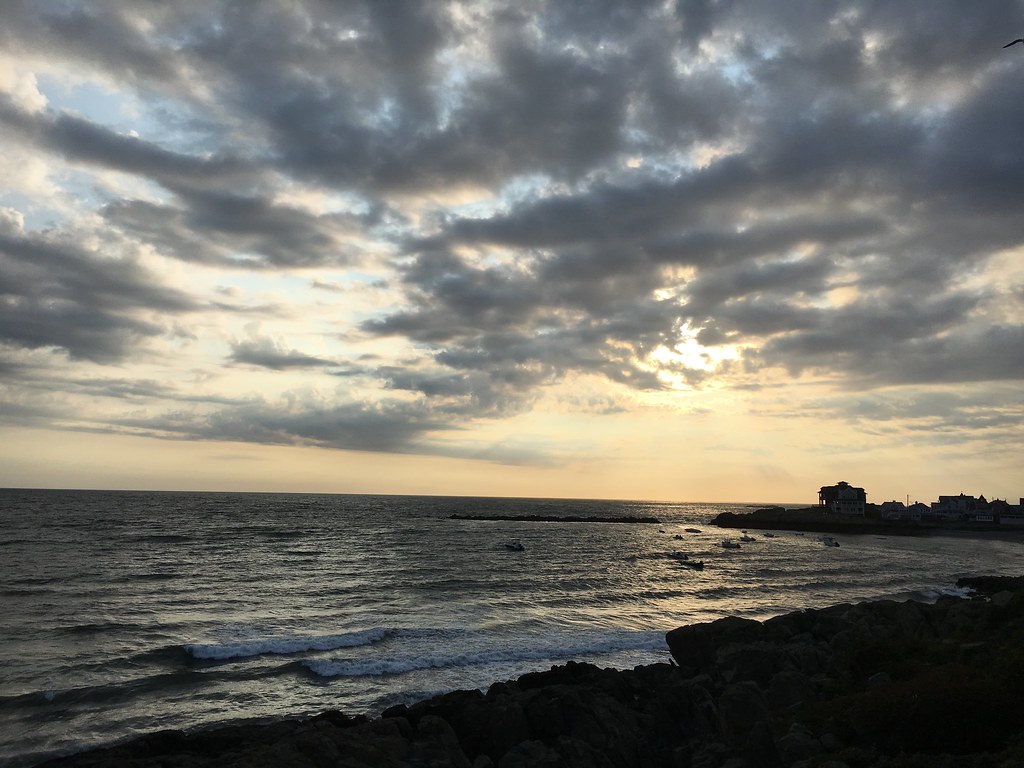
Gun Rock Beach was empty when we got there, the sky still deep blue, the waves rolling in steady and unhurried. Mom took my hand and led me down to where the water met the sand. “Watch,” she said, pointing at the horizon.
The color came in slow, a thin line of pink first, then orange bleeding into it, the water catching the first light and throwing it back like it had swallowed a piece of the sun. Mom knelt beside me and put her arm around my shoulders.
“The world is big, Matty,” she said quietly. “Bigger than you can see from here. No matter how hard things get, the sun always rises.”
I didn’t understand what she meant, not really. At six, hard things were scraped knees and bedtime. But I felt the weight of it anyway, the way you can feel that something matters to the person saying it even when you don’t yet know why.
She reached into her bag and pulled out a small wrapped package. “I want you to have this,” she said, pressing it into my hands. “So you always remember today.”
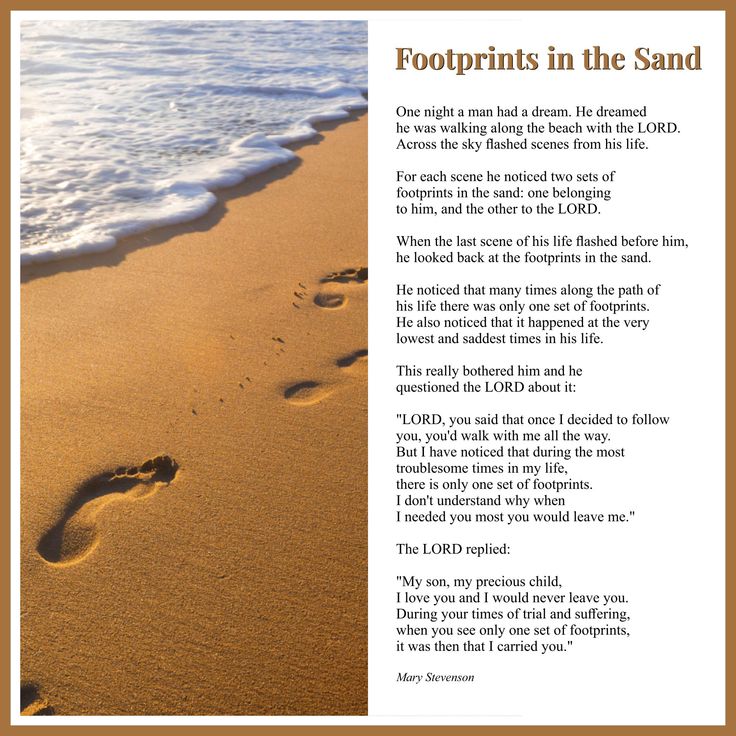
Inside was a framed picture, a shoreline with a single set of footprints trailing off into the distance, and underneath it, in careful script, a poem called Footprints in the Sand. I didn’t know the whole meaning yet. I just knew my mom had given it to me on a beach at sunrise, and that alone made it feel important. I hung it on my bedroom wall when we got home, and it stayed there for years, through scraped knees and bad dreams and everything else a kid goes through.
Twenty-three years later, I drove back to that same beach alone.
It was June of 2005. I’d been diagnosed with MS a few months earlier, and I was still deep in it, the kind of depression that doesn’t announce itself, it just sits on your chest and makes getting out of bed feel like an argument you keep losing. I’d just been cleared to drive again, one of the small proofs that my body was starting to cooperate, and instead of going anywhere useful I found myself pointed toward Gun Rock.
I sat where I remembered sitting at six years old, and for a while I didn’t think about much of anything, just the waves, in and out, the same rhythm they’d had my entire life whether I was there to hear them or not. Then a song started playing in my head, uninvited, the way songs do. Cat Stevens. Moonshadow. I hadn’t thought about that song in years, but there it was, looping, and somewhere in the third or fourth pass through it I noticed something that stopped me cold. The lyrics are about losing pieces of yourself, your legs, your eyes, and choosing to keep moving anyway, shadow and all. And the title. Moonshadow. M-S.
I don’t know how long I sat there after that. Long enough that the tide had shifted by the time I got back in the car. I drove home to Prospect Street and asked my dad if he still had the old Cat Stevens CD, and I played it on repeat the whole way, trying to figure out why a song from my childhood had just cracked something open in me. When I got home I went straight for a green spiral notebook, the one I’d started filling in the hospital, page after page of everything I couldn’t say out loud at the time. I sat there rereading it, and then I found Jocelyn in the kitchen.
“That’s my book,” I told her. “I’m going to write an MS memoir.”
I think about that poster more than I let on. When you only see one set of footprints, that’s when you’re being carried. I didn’t understand it at six. I’m not sure I fully understand it now. But I know that whatever it is, whoever it is, it’s the thing that’s gotten me out of bed on the mornings I didn’t think I could, the thing my dogs have carried for me more times than I can count, the promise that keeps getting kept even when I’m not sure I have it in me. Maybe that’s faith. Maybe it’s just love that outlasts the person who’s still asking the question. Either way, it started on a beach with my mom before sunrise, and it was still there waiting for me twenty-three years later when I needed it most.
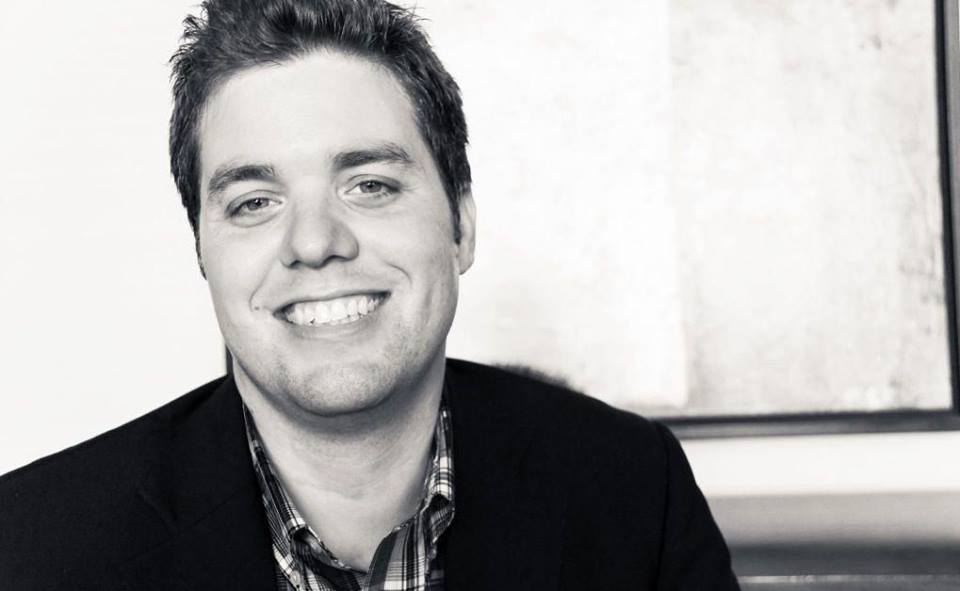
About the Author
Matt Cavallo
Author, keynote speaker, healthcare leader, and storyteller. Twenty years with MS, turned into stories that move readers, audiences, and healthcare leaders alike.