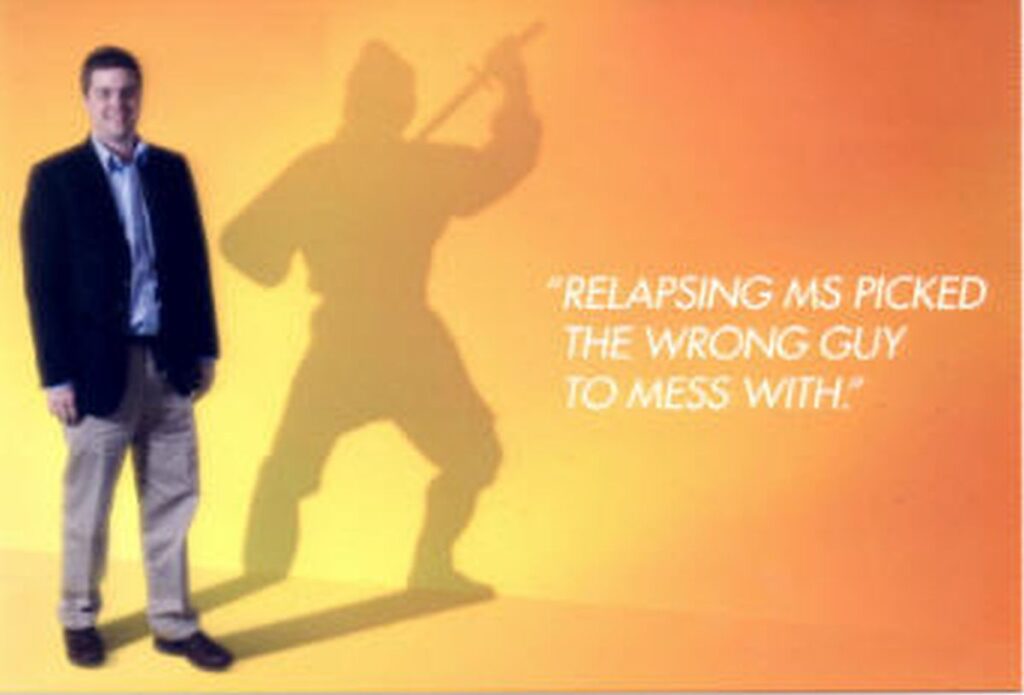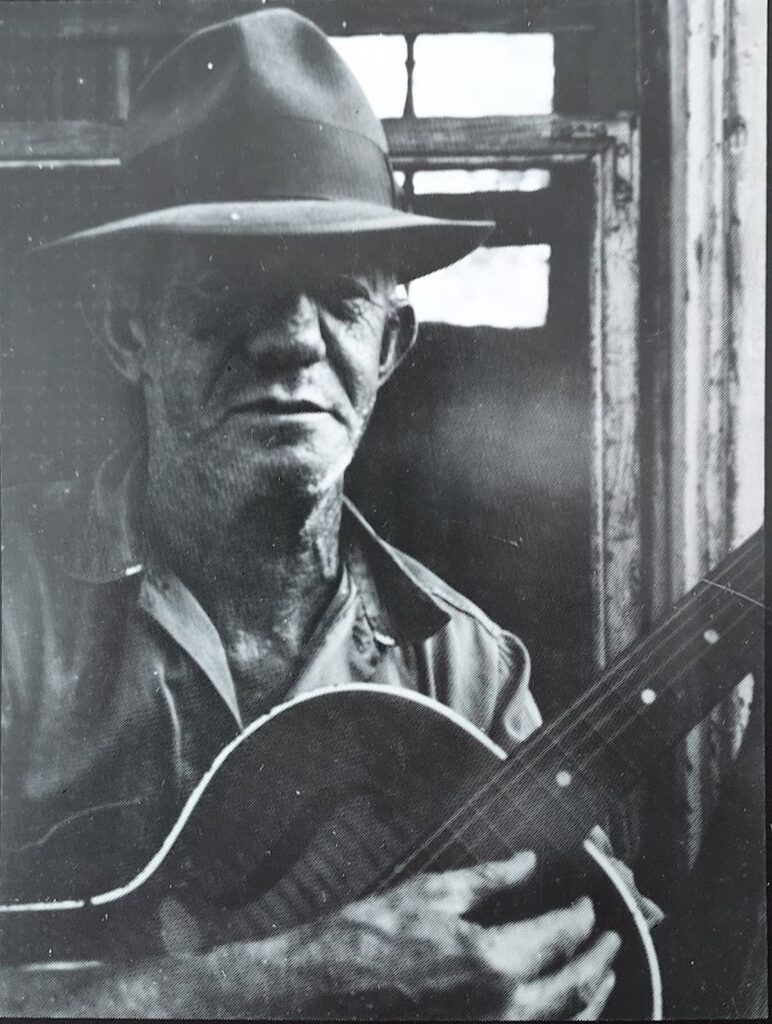
In 1981 when I was only four years old, my Aunt Loretta passed away from complications related to her Multiple Sclerosis. My only living memories are that she was in a wheelchair then bedbound and unable to talk. She could only mumble and moan. As I lay in my hospital bed in 2005, I’m thought that my fate was going to be the same as my Aunt Loretta. The whispers from my family sitting around my hospital bed were saying, “He looks like Loretta all over again.”
In the spring of 2005, approximately 24 years after Loretta’s passing, the treatment options were different for me. During the late 80’s, clinical trials were underway for relapsing remitting MS using Interferon Beta 1B. According the National MS Society, “In 1988, a large-scale clinical trial of IFN-beta-1b, involving 372 MS patients, was begun at several medical centers in the United States and Canada…At the end of two years, the group receiving the higher dose of IFN-beta-1b had a lower exacerbation rate than the placebo group. In addition, the median time between exacerbations was significantly longer in the higher dose IFN-beta-1b group than in those receiving placebo.” This clinical trial paved the way for Betaseron to become the first FDA approved drug for people living with relapsing forms of MS.
By 2005, there were three approved Interferon treatments. I decided to try Avonex because I wanted the once a week option. However, by December of 2006 I was having problems with my weekly injection. I was getting hives and chest pain with each dose. I talked to my neurologist and a simple blood test proved that I was part of a small percentage of the population that is allergic to interferon.
During this time, I was following another clinical trial for Natalizumab. This one was scary because two MS patients and one Crohn’s disease patient had died during this trial causing Biogen Idec, the drug company, to voluntarily pulled it off the market to conduct further trials. However further trials occurred and the drug was released to market in July of 2006 as Tysabri. According to the NIH, “In the first study, patients receiving Natalizumab had a relapse rate of 0.25 relapses per patient year, compared with 0.74 in the placebo group (66% relative reduction of relapses).”
While the prospect of trying a new FDA approved treatment was scary, the data from the clinical trials suggested that Tysabri could help reduce relapses by up to 66%. For a person who experienced three major relapses over an eighteen month period and was allergic to Interferon, I wanted to try this potentially efficacious treatment. After discussing the risks with my doctor, I got on Tysabri in February of 2007 and am still on it today. During that time, I have only had one relapse when I stopped taking Tysabri to have an anterior cervical fusion in 2010.
This blog is not an advertisement for Tysabri. What works for me, may not work for you. It is important to talk to your talk neurologist about any treatment options that you are considering.
This blog is about supporting clinical trials. Without clinical trials, we would not have the significant scientific breakthroughs that we have experienced in the past couple of years. Today, there are three oral medications that are approved for treating MS and one oral medicine for improving gait dysfunction with those living with MS. These were not available when I was first diagnosed or even when I got on Tysabri six years ago.
With so many breakthroughs on the horizon, MS is no longer the fate that my Aunt Loretta experienced. Today, more than any time in the past, we have the opportunity to participate in the next scientific breakthrough which may be in the area of Myelin repair.
How do you find out what clinical trials are going on near you? Healthline.com has published an extremely useful tool for finding clinical trials. Here are the steps for finding out information on active clinical trials in your area:
- Click on the following link: http://www.healthline.com/health/trial-reach-multiple-sclerosis-clinical-trials
- Fill out the Location and then click search.
- Click on the trials in your area to find out more about each trial.
- Print out the trial pages you are interested in and bring them to your next neurologist appointment. This will be a basis for a great discussion about your treatment options.
This Healthline.com tool is easy to use, provides incredibly useful information about clinical trials in your area and is free to use.
I would like to personally thank all of the people involved in researching MS. What research has accomplished through clinical trials has changed the paradigm of Multiple Sclerosis. MS is no long my Aunt Loretta’s disease. Today there is hope.
References:
https://www.betaseron.com/home
http://www.ncbi.nlm.nih.gov/pmc/articles/PMC1370979/
http://www.healthline.com/health/trial-reach-multiple-sclerosis-clinical-trials

About the Author
Matt Cavallo
Author, keynote speaker, healthcare leader, and storyteller. Twenty years with MS, turned into stories that move readers, audiences, and healthcare leaders alike.